When we think of workplace hazards, we often picture heavy machinery, chemical exposure, or working at heights. However, for thousands of professionals across the country, one of the most significant daily threats is smaller than a sesame seed.
For forestry crews, park rangers, utility workers, surveyors, and landscapers, tick-borne illnesses represent a serious occupational hazard. As tick populations expand and disease prevalence rises, employers must recognize that equipping their teams with professional-grade tick removal kits is not just a perk; it is a critical component of occupational safety.
The Hidden Hazard in the Field
Outdoor workers spend prolonged periods in prime tick habitats: wooded areas, tall grasses, and brush. This continuous exposure drastically increases their risk of encountering blacklegged (deer) ticks, American dog ticks, and Lone Star ticks.
The consequences of a tick bite can be severe. Lyme disease is the most well-known threat, but workers are also at risk for anaplasmosis, babesiosis, and the potentially fatal Powassan virus. These illnesses can lead to chronic joint pain, neurological issues, severe fatigue, and extended absences from work. In severe cases, tick-borne diseases can result in permanent disability or career-ending health complications.
Employer Duty of Care
Under the Occupational Safety and Health Act (OSHA), employers have a general duty to provide a workplace free from recognized hazards that are causing or are likely to cause death or serious physical harm. In regions where tick-borne diseases are endemic, ticks are undeniably a recognized hazard.
While employers cannot eliminate ticks from the forest, they can and should provide the necessary protective equipment and protocols to mitigate the risk. This includes:
- Training: Educating workers on tick identification, safe removal, and disease symptoms.
- Prevention: Providing or recommending permethrin-treated clothing and EPA-registered repellents.
- Response: Equipping crews with the tools needed to remove ticks safely and immediately in the field.
Why Improvised Solutions Fail
Too often, field crews are left to improvise when they find a tick. They might use blunt multi-tool pliers, try to scrape the tick off with a fingernail, or resort to dangerous myths like burning the tick with a lighter.
Improvised removal methods are dangerous. Blunt tools often crush the tick’s body, forcing infected fluids into the worker’s bloodstream. Improper pulling can leave the tick’s barbed mouthparts embedded in the skin, leading to secondary infections. When a worker is miles from a clinic or even their truck, they need reliable tools on their person.
The Case for the Trail Ready Solutions Kit
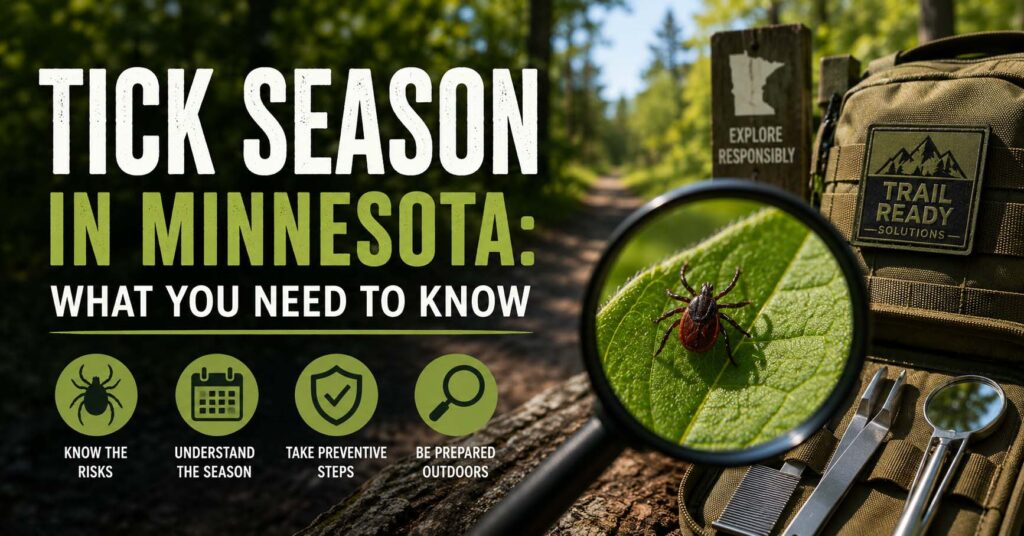
A professional outdoor worker requires professional gear. The Trail Ready Solutions Tick Removal Kit is designed specifically for field conditions.
- Field-Tested Durability: Housed in a rugged Military MOLLE bag, the kit attaches easily to a work belt, harness, or backpack. It is built to withstand rain, mud, and rough handling.
- Precision Tools: The kit includes specialized, fine-tipped removal tools designed to extract ticks cleanly by the head, minimizing the risk of disease transmission and leaving no mouthparts behind.
- Comprehensive Inspection: A stainless steel comb allows workers to thoroughly check their hair and scalp, while the magnifying mirror assists in identifying tiny nymphal ticks in hard-to-see areas.
An Investment in Health and Productivity
Providing tick removal kits to outdoor crews is a low-cost, high-impact safety measure. The cost of a single kit is negligible compared to the medical expenses, workers’ compensation claims, and lost productivity associated with a single case of Lyme disease.
By equipping your workforce with the Trail Ready Solutions kit, you demonstrate a commitment to their health and ensure they have the tools they need to stay safe, no matter how deep into the woods their job takes them.
© 2026 Trail Ready Solutions. All Rights Reserved.