Lyme disease is the most common vector-borne disease in the United States, but it is also one of the most misunderstood. Many people believe that if they do not see a “bull’s-eye” rash, they do not have Lyme disease. This misconception can lead to delayed treatment and severe, long-term health complications.
Understanding the symptoms of Lyme disease—and how they progress over time—is critical for anyone who spends time outdoors. Here is a breakdown of the three stages of Lyme disease and what you need to watch for after a tick bite.
Stage 1: Early Localized Lyme Disease
This stage occurs days to weeks after an infected blacklegged tick bites you. The bacteria (Borrelia burgdorferi) have not yet spread throughout your body, but they are multiplying near the site of the bite.
The Erythema Migrans (EM) Rash The hallmark symptom of early Lyme disease is the Erythema Migrans rash, commonly known as the bull’s-eye rash. It usually appears within 3 to 30 days at the site of the bite and expands gradually over several days.
However, it is crucial to know that not everyone gets the rash. According to the CDC, up to 30% of people infected with Lyme disease never develop an EM rash [1]. Furthermore, the rash does not always look like a perfect bull’s-eye; it can be a solid red blotch, and on darker skin tones, it may appear purple or dark brown and be very difficult to see.
Other Early Symptoms Even without a rash, you may experience flu-like symptoms, including: * Fever and chills * Severe fatigue * Muscle and joint aches * Swollen lymph nodes * Headache
Stage 2: Early Disseminated Lyme Disease
If left untreated, the bacteria begin to spread through the bloodstream to other parts of the body. This stage typically occurs weeks to months after the tick bite.
Symptoms of Stage 2 include: * Multiple Rashes: Additional EM rashes may appear on other parts of the body, far from the original bite site. * Neurological Issues: The bacteria can affect the nervous system, causing facial palsy (loss of muscle tone or droop on one or both sides of the face), severe headaches, and neck stiffness associated with meningitis. * Cardiac Problems: Lyme carditis occurs when the bacteria enter the tissues of the heart, which can cause heart palpitations, an irregular heartbeat, shortness of breath, or dizziness. * Joint Pain: Bouts of severe joint pain and swelling can begin, often shifting from one joint to another.
Stage 3: Late Disseminated Lyme Disease
If Lyme disease is not treated in the first two stages, it can progress to late disseminated Lyme disease months or even years after the initial bite. At this point, the bacteria have deeply established themselves in the body’s tissues.
Symptoms of Stage 3 include: * Lyme Arthritis: This is the most common symptom of late-stage Lyme. It causes severe, chronic joint pain and swelling, particularly in large joints like the knees [2]. * Chronic Neurological Complaints: Patients may experience shooting pains, numbness or tingling in the hands or feet, and problems with short-term memory or cognitive function (often described as “brain fog”).
The Importance of Early Intervention
Lyme disease is highly treatable if caught early. A short course of oral antibiotics, such as doxycycline, is usually effective at curing the infection in its early stages. However, if the disease progresses to the later stages, treatment becomes much more difficult, often requiring intravenous antibiotics, and some patients may suffer from long-term symptoms even after the bacteria are cleared.
Prevention and Immediate Action
The best way to avoid the complex and debilitating symptoms of Lyme disease is to prevent the bite in the first place. Use repellents, wear treated clothing, and perform thorough tick checks after every outdoor excursion.
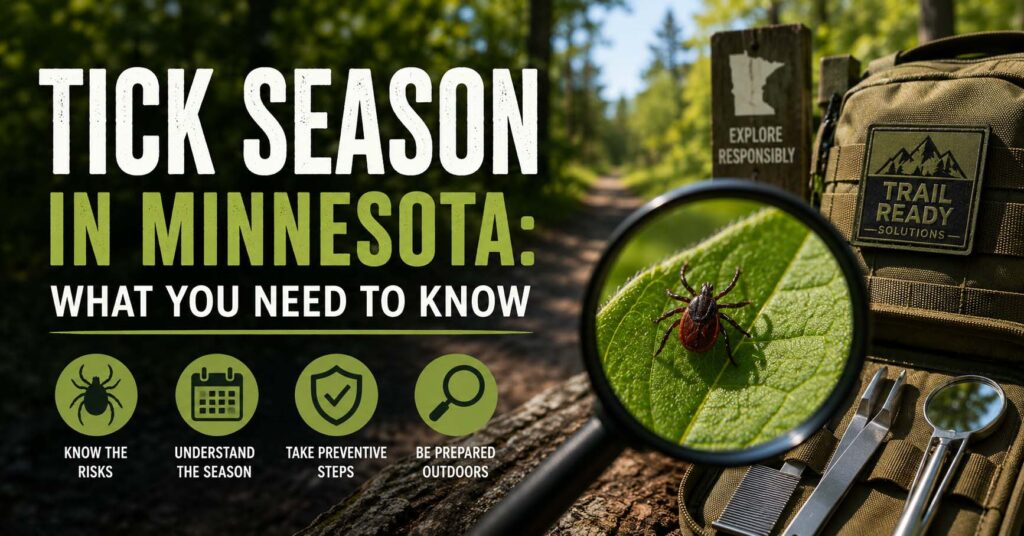
If you do find a tick, time is your enemy. The longer an infected tick is attached, the higher the likelihood it will transmit Lyme disease. Do not wait until you get home or go to a doctor to have it removed. Equip yourself with the Trail Ready Solutions Tick Removal Kit so you have the precision tools necessary to extract the tick safely and immediately in the field.
References
[1] Centers for Disease Control and Prevention, “Signs and Symptoms of Untreated Lyme Disease,” https://www.cdc.gov/lyme/signs-symptoms/index.html [2] Harvard Health Publishing, “Lyme Disease Stages and Symptoms,” https://www.lyme.health.harvard.edu/stages-and-symptoms/
© 2026 Trail Ready Solutions. All Rights Reserved.